
Claude Code turns one at Tropic
The story of going from zero to AI-native.

Research Preview
The blog post introducing Claude Code was published on February 24th 2025, and shortly after, our team gained access to the research preview.
At the time, many of us were already using GitHub’s Copilot, which provided a better IntelliSense experience, and Cursor, which already had an agentic style for accepting/rejecting changes.
Our staff engineering team approached Claude Code with mixed feelings:
Claude Code was terminal-based, which appealed to Vim users but was mildly inconvenient for RubyMine/VS Code users.
We were cautious about privacy implications (not allowing our codebase to be used for training).
We were cautious about costs, as it was a token-based pricing model. Which very quickly turned into a friendly tokenmaxxing proving that Goodhart’s law never fails.
Early Days
Initial tests were honestly unimpressive.
We liked the agentic paradigm and the different modes of execution (accepting edits vs. requesting permission), but it could only consistently deliver on smaller asks.
Around the GA date for Claude Code on May 22nd, 2025 (the birthday reference), we made it available to the entire team. Every engineer had the flexibility to choose their AI tooling, so we were letting the proverbial 1000 AI flowers bloom.
As the months went by, to support AI adoption, we ran surveys and held tech talks to discuss how to get the most out of these new tools.
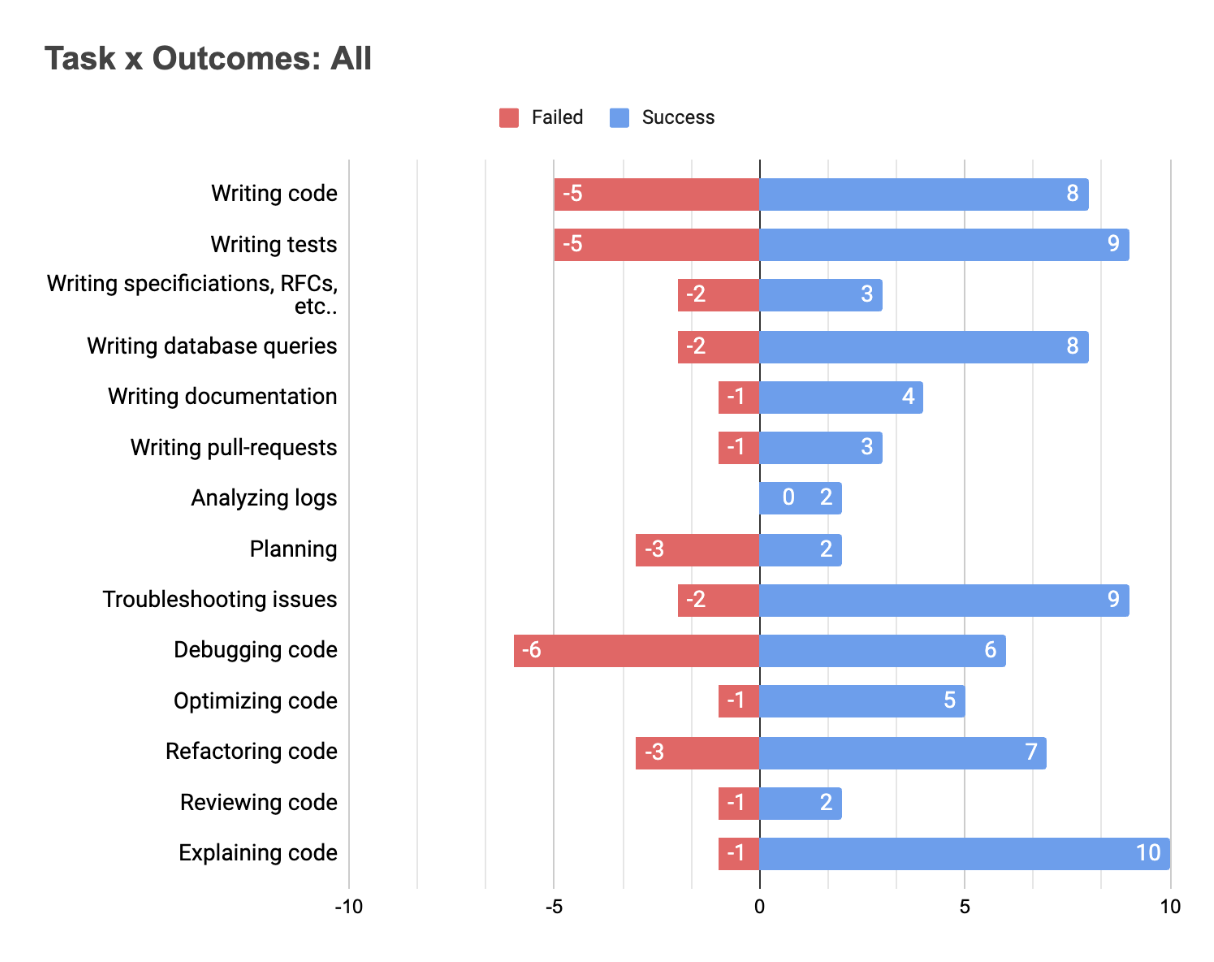
We worried about the risk of unintentionally offloading critical thinking to AI and the fact that a Gen AI was indeed generating a lot of code.
On the other hand, we were excited about always-on pair programming with AI, increased productivity / time savings, and the accelerating pace of innovation.
Event Horizon
Late 2025 was the point of no return.
The new Sonnet/Opus 4.5 enabled Claude to handle more complex tasks, skills were introduced, and we started to see the value of connecting MCP servers to our workflow (ticketing system, GitHub, Sentry, DataDog). Claude Code was now doing a lot more than just writing code.
Gradually, then suddenly, all engineers were now piloting Claude Code as their main tool for writing code.
The next era of Software Engineering had just begun.